
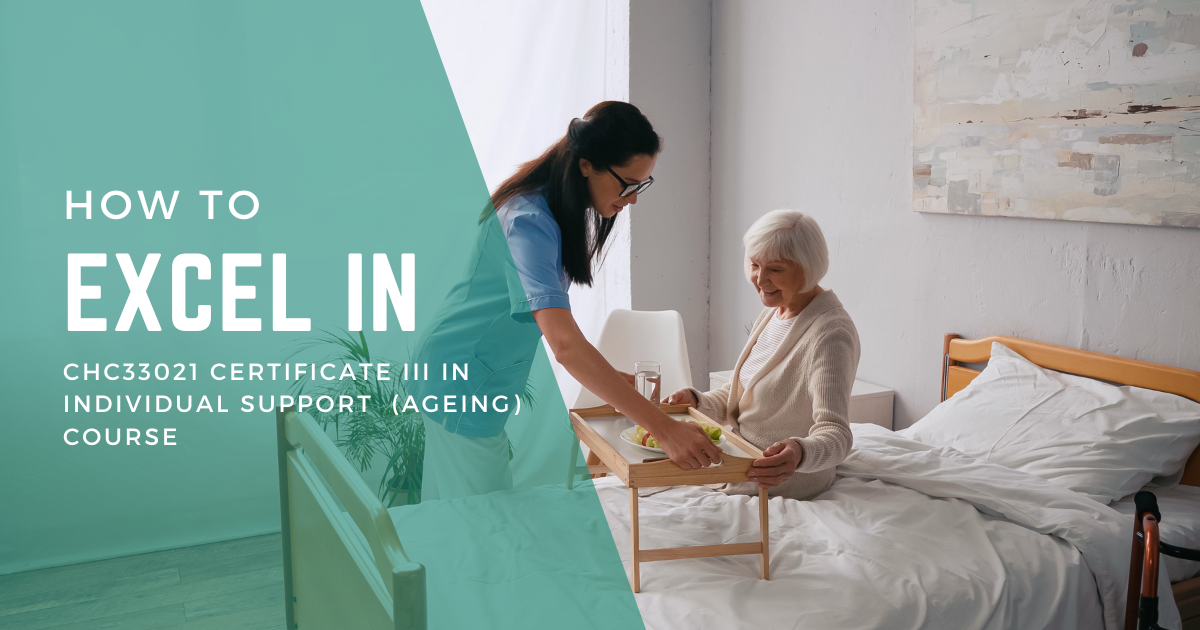
How To Excel In The CHC33021 Certificate III In Individual Support (Ageing) Course
PUBLISHED28 May 2024
WRITTEN BYAllison Roos
Many individuals aspire to make a meaningful impact in aged care but may wonder how they can fit completing the Certificate III in Individual Support (Ageing) course into their busy lives.
At Kirana Colleges, we offer the CHC33021 Certificate III in Individual Support (Ageing) course with a perfect blend of accredited education and practical experience.
This program is tailored for those balancing life with the ambition of working in individual support. With our CHC33021 Certificate III in Individual Support (Ageing) course at Kirana Colleges, you are empowered to transform your life and bring positive change to the lives of those in the ageing sector.
Step #1 Identify your learning style
Find what works for you
- Understanding your learning style is crucial for excelling in the CHC33021 Certificate III in Individual Support (Ageing) course.
- Whether you’re a visual learner who thrives on diagrams, an auditory learner who grasps concepts through podcasts, a reading/writing learner who prefers text, or a kinesthetic learner who needs hands-on experience, recognising and applying your learning style can significantly boost study efficiency and information retention.
Tailor your study approach
- Customising your study habits to match your learning style can transform your study sessions. For instance, visual learners can greatly benefit from creating diagrams for complex topics within the CHC33021 Certificate III in Individual Support (Ageing) course, making study sessions more productive and engaging.
Step #2: Set realistic goals
Break down the syllabus
- Effectively organising your syllabus into weekly targets and utilising digital tools for planning is essential for managing individual support worker training. Through visible milestones, you are not only able to track your progress but also maintain motivation.
- At Kirana Colleges, our curriculum for the CHC33021 Certificate III in Individual Support (Ageing) course, is carefully designed to fit seamlessly into your life, offering both recognised qualifications and employer-valued skills through practical work experience.
Balance your commitments
- Successfully integrating your studies, such as the CHC33021 Certificate III in Individual Support (Ageing) online course, with personal and work commitments requires establishing a balanced routine. This balance is key to navigating your educational journey with Kirana Colleges effectively and leveraging support from your network.
Step #3: Leverage online resources
Utilise Kirana Colleges’ online platform
- Our online platform at Kirana Colleges offers a comprehensive range of resources, making the CHC33021 Certificate III in Individual Support (Ageing) online course, both flexible and accessible. From interactive modules to direct academic support, these tools are essential for achieving success in your individual support qualification.
Engage with peers online
- Expanding your network through online forums and study groups enhances your learning experience. Collaborating on virtual courses and solving problems collectively can offer new insights and deepen understanding.
Step #4: Schedule regular study times
Dedicate specific hours
- Identifying your optimal study times and establishing a consistent schedule minimises distractions, maximising focus and productivity. This discipline is particularly beneficial for students pursuing certificate programs online.
Maintain Balance
- Maintaining a healthy work-life-study balance requires regular adjustments to your study routine. Incorporating breaks is essential for recharging and preventing burnout, which is crucial for anyone undertaking the CHC33021 Certificate III in Individual Support (Ageing) online course.
Step #5: Apply knowledge through practical experience
Seek practical experience
- Gaining practical experience through volunteering or part-time work in the individual support sector is invaluable. Applying course theories to real-world scenarios enriches learning and comprehension, particularly relevant for the CHC33021 Certificate III in Individual Support (Ageing) course.
Reflect and discuss
- Engaging in reflective practice and discussion enriches your educational experience. Sharing insights prepares you for a career with a support worker certification, bridging theory with practice.
Step #6: Review and reflect regularly
Utilise self-assessment quizzes
- Using quizzes to gauge your understanding and pinpoint areas for improvement is pivotal. Kirana Colleges provides an array of resources to support this reflective practice.
Learn from feedback
- Feedback from assessments offers invaluable insights. Analysing this feedback helps fine-tune your approach, focusing on areas that require additional effort or understanding and ensuring you are well-equipped for success in your chosen field.
Frequently Asked Questions (FAQ)
How is the content of Certificate III in Individual Support (Ageing) updated to reflect industry changes?
- Kirana Colleges prioritises the relevance and currency of the CHC33021 Certificate III in Individual Support (Ageing) curriculum by fostering close relationships with aged care professionals and industry experts.
- This collaboration is key to integrating the latest practices, regulations, and technologies into the course content, ensuring students receive an education that mirrors the evolving landscape of the aged care sector. We also ensure that all our trainers and assessors are engaged with the industry by working in it themselves.
Is there a Certificate III in Aged Care?
- The CHC30212 Certificate III in Aged Care has been superseded and updated to the CHC33021 Certificate III in Individual Support (Ageing) as the entry qualification used to work in an aged care setting. The CHC33021 Certificate III in Individual Support (Ageing) qualification offered by Kirana Colleges is the contemporary pathway for individuals looking to enter the aged care sector, ensuring students receive up-to-date aged care training that encompasses a broader range of support needs beyond traditional aged care settings.
Frequently Asked Questions
Q: I am a mature aged student, how can Kirana Colleges cater to me?
Our courses are online, meaning you can study whenever, wherever, and however you like! This is ideal for someone who has a busy lifestyle and needs to study in the evening or mornings, depending on their lifestyle!
Q: Do you have any support services considering I am back to study as a mature aged student?
Yes we do! As a joint initiative with AccessEAP, we provide you with a dedicated counselling hotline which is available 24 hours a day, 355 days a year! You are also offered 3 complimentary face-to-face counselling sessions (or via skype).
We also have a dedicated student support team that can assist you with any enquiries you may have.
Q: How many hours should I spend a week studying?
As a full-time student, you should spend around 15-20 hours studying and working on assessments. If you use this time a week to work on your course, you can heavily reduce the workload and reach your career goal quicker!
Q: Do I need to have computer skills?
As a mature aged student, you will need to have basic computer skills when enrolling into our course as you will be spending most of your time online with research and also on our learning platform.
Speak to one of our Course and Career Advisors
if you have any further questions!
 Schedule a Time
Pick a time: lunchtime, after the kids are in bed, anytime. We’ll call you back.
Related Articles

Insights & Advice
How does a qualification in Child Care benefit Your Professional Career?

Insights & Advice

Insights & Advice

Insights & Advice